

Why Should Boys Learn About Menstruation, and How Is Ujaas Leading the Way?
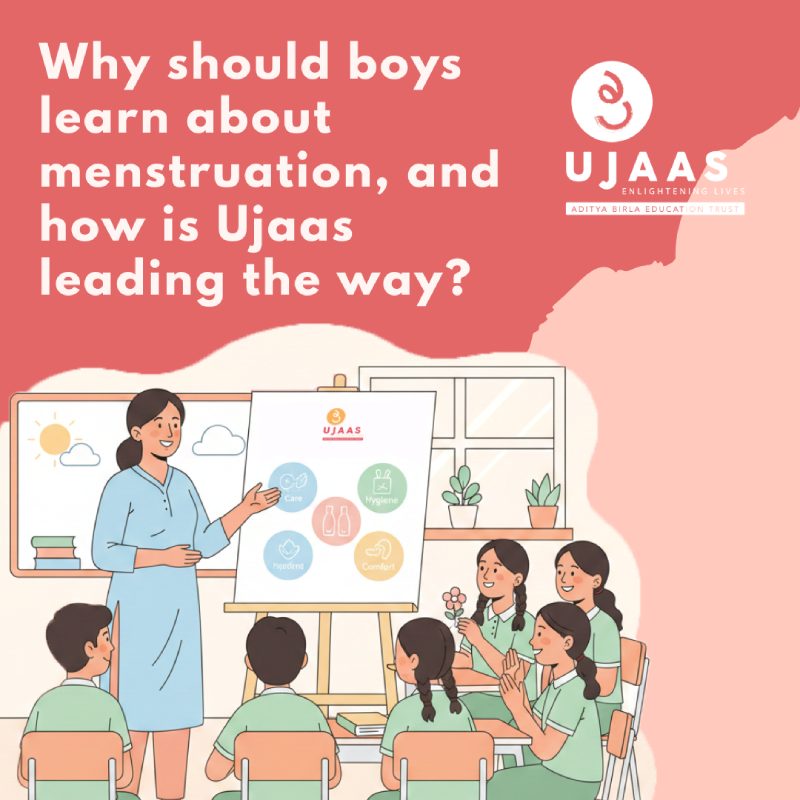
Discussions of menstruation have long remained a female topic surrounded by secrecy and shame. However, menstruation is a natural biological process that everyone should talk about. Regardless of this, numerous boys grow up without understanding what periods really are. A lot of them also inherently come to think of it as a topic of shame. It is time to shift that narrative.
Having boys learn about menstruation is not only a matter of education but also empathy and equality. Here, programs like Ujaas, a prominent menstrual health program and menstrual initiative, play a transformative role.
We will explore the need for menstruation education for boys, the challenges that come with it, and how Ujaas is at the forefront of spreading menstrual health awareness among boys in India.
Why Boys Should Understand Periods
In many Indian households, menstruation is still considered a "women’s topic". Boys are often excluded from these discussions, creating an information gap that leads to misunderstanding and embarrassment. But the answer to why boys should understand periods lies in breaking this very cycle of ignorance and stigma.
Founded by Advaitesha Birla, Ujaas is a menstrual health and menstrual hygiene initiative dedicated to not just empowering girls with knowledge and resources but also engaging boys in meaningful conversations about menstruation.
What makes Ujaas unique is its inclusive approach. Rather than focusing solely on menstruators, it views menstrual health education as a community responsibility. Boys, teachers, and parents are encouraged to participate, fostering an environment of openness and empathy.
The Importance of Menstruation Education for Boys
Menstruation education for boys should begin early, preferably at school. When boys and girls receive the same information about puberty and menstruation, it builds mutual understanding.
In India, it has been studied that most teenage boys know very little or nothing about menstruation. Others get to know it through stereotypical jokes. Such ignorance may come in the form of bullying, teasing, or being insensitive to girls during their menstrual period.
Educating boys about menstruation serves multiple purposes. Some of them can be as follows:
- It promotes menstrual health awareness among boys in India, enabling them to support friends, sisters, classmates, or future partners.
- It fosters emotional intelligence and teaches boys empathy along with shared responsibility.
- It prepares young men to participate in public discussions and policymaking around menstrual health and hygiene. This leads to more inclusive solutions.
This can be achieved by making menstrual education co-educational and holistic so that when the young people are taught about menstrual issues, they can view the health of menstruation differently.
Cultural Barriers to Menstrual Health Awareness Among Boys in India
Even though awareness is increasing, there are still strong cultural taboos that are associated with menstruation in India, which makes it hard to talk about, particularly with boys. Most teachers and parents are afraid to approach the matter publicly lest it come out as inappropriate. This causes the boys to be ignorant and inquisitive, which in most cases leads them to unreliable sources.
Such common cultural barriers include the following:
Gender segregation in education:
Separate classes for girls about menstruation, excluding boys entirely
Cultural discomfort:
Elders often view discussing periods with boys as taboo.
Lack of teacher training:
Teachers are not always ready to approach the subject of menstruation in a sensitive manner.
Media misrepresentation:
We see periods seldom represented in the mainstream media, which supports the idea of it being something to hide.
The only way to break these barriers is by a concerted effort of schools, parents, NGOs, and the community. And that is precisely what Ujaas is pursuing as its long-term agenda in promoting menstrual health and menstrual hygiene initiative programs in India.
By introducing menstrual health awareness among boys in India, Ujaas is promoting a more informed and supportive generation.
The Ripple Effect of Menstruation Education for Boys
Having boys learn about menstruation is beneficial to society in the long term. It not only reduces stigma but also improves gender equality and public health. This awareness has a positive ripple effect in the following manner:
Empathy and Respect:
Boys who learn about menstruation become respectful of the experience of women instead of teasing or shaming them.
Supportive Workplaces:
These boys will prove to be more supportive of menstrual-friendly workplaces and policies as they grow into men.
Health Literacy:
A more informed population promotes better menstrual health and hygiene practices overall.
Breaking Generational Stigma:
Educated men would create new generations in which menstruation becomes a normal subject of conversation at home and in school.
The Future of Menstrual Health Awareness in India
To ensure that menstrual health awareness among boys in India actually takes root, the issue of menstruation should be discussed at a young age and openly. As more organisations, educators, and young voices enter the debate, the silence surrounding menstruation is slowly being substituted with an informed discussion.
Nevertheless, we need to make sure that menstrual health and hygiene topics are included in school programs on a regular basis and made accessible to all children, irrespective of gender.
Ujaas, by its uncompromising dedication and all-inclusive strategy, is establishing a standard. It is helping create a future in which empathy and equality will succeed by letting boys understand menstruation.
Final Thoughts
The reasons why boys should understand periods are simple: because empathy begins with awareness. When boys are involved in the discussion, menstruation stigma starts disappearing, and a more inclusive society will be developed.
Boys knowing about menstruation is not only a measure towards gender equality, but a measure that leads towards humanity. These discussions today are the future of menstrual health awareness among boys in India .