

How Do Menstrual Taboos Affect Women’s Participation in Sports?
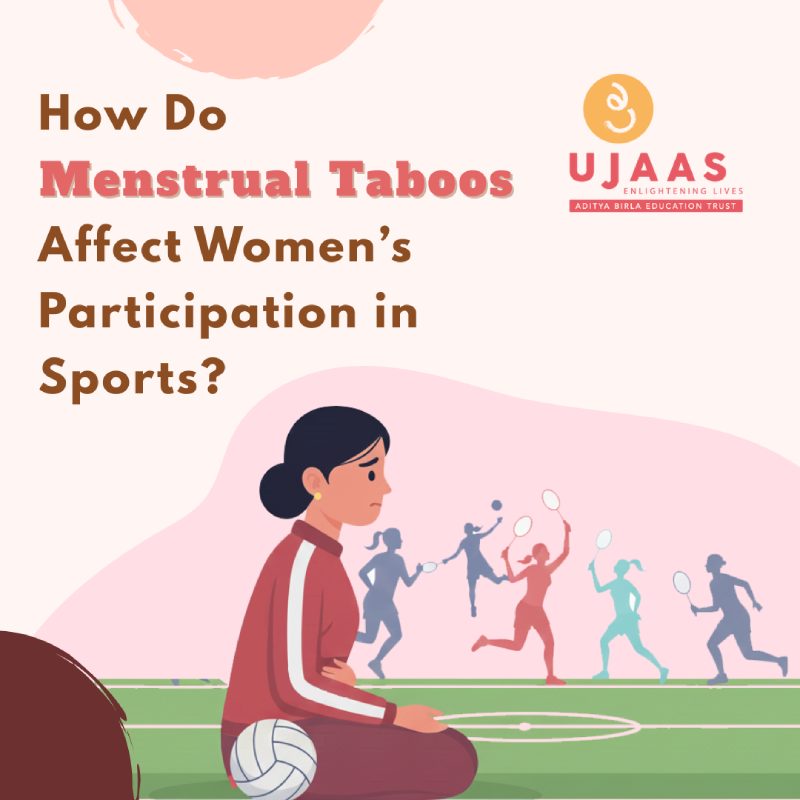
Throughout the decades, women around the world have been fighting opponents not only in sports fields, but also deeply rooted social and cultural barriers that limit their participation in sports. Menstruation is one of such significant obstacles, or to be more exact, the stigma related to it.
Although there have been advancements in gender equality and empowerment, menstrual taboos in sports participation still limit numerous girls and women from participating in sports activities fully. It’s important to understand how period stigma affects women in sport and how these issues can be solved by raising awareness and educating women.
Ujaas is a menstrual health and menstrual hygiene initiative established to create awareness among young girls and break these barriers. This initiative makes women more empowered by normalising menstruation and offering appropriate information so that they can take care of their bodies and remain active in sports without any fear or stigma.
Breaking the Silence Around Periods in Sports
Menstruation has been regarded as an “unclean” subject spoken about in low tones in most regions of the world. These beliefs, when transferred into the sporting arena, provide enormous obstacles to girls and women who want to engage in sports as a profession or even on a recreational basis. Menstrual taboos in sports participation typically make young athletes feel ashamed of having symptoms during practice or competition.
Research conducted has revealed that a high proportion of female athletes period taboos are ones where they usually feel the need to conceal their menstrual pain, or they tend to ignore it and do not want coaches and their fellow athletes to know about it. This silence does not allow them to get the appropriate support, whether it is rest, nutrition, or medical assistance, which can have a toll on their performance and mental well-being.
Cultural beliefs about menstruation and sports differ across nations. Some cultures prohibit menstruating women from going to playgrounds, temples, or water bodies, and in others, they are teased or ostracised during their period. These attitudes are even transmitted across generations, forming a strong mental barrier that prevents young girls from even contemplating physical activity.
Understanding How Menstrual Taboos Limit Sports Participation
Menstrual taboos on sports participation can have both direct and indirect effects. They not only restrict the girls physically, but also mentally and socially. The following are some of the key obstacles that menstruation presents to the sporting world:
Absence of Menstrual Education and Awareness
A number of young girls do not know how to properly handle their periods when they are exercising. Lack of awareness on menstrual health and hygiene forces them to pull out of sports during their menstrual periods due to fear or misunderstanding.
Lack of Sanitary Facilities in Sports Facilities
Unavailability of clean toilets, disposal washrooms, and change rooms is a significant problem in schools and sporting centres. In the absence of adequate infrastructure, menstruation becomes a barrier for girls in sports participation, particularly in rural or less privileged regions.
Performance Stigma and Anxiety
The fear of staining, pain, or just being judged deters many female athletes from doing their best in sports. The period stigma among women in sport not only influences confidence but also results in lower participation and even dropouts.
Cultural Taboos and Legends
Cultural beliefs linking menstruation and sport in several communities do not encourage female physical activity, describing it as something harmful or unfeminine. These myths are not only limiting participation but also negatively contributing to gender stereotypes.
Science says Menstruation Should Not Be a Barrier to Sports
One should realise that menstruation alone does not impair physical ability. In reality, many famous female athletes continue training and competing throughout their menstrual cycles. Studies indicate that even though hormonal changes may affect energy levels and endurance, they do not always create a barrier to sports.
However, due to prevalent menstrual taboos in sports participation, most women learn to regard menstruation as a hindrance instead of a normal biological phenomenon. This gap in perception can be removed only by spreading the right awareness about the female athletes' period taboo.
Silence is central to the issue. There is an absence of open discussion about menstruation in sporting arenas. The topic is not discussed by coaches and peers, which leads to young girls having to struggle with discomfort and stigma independently. This is why menstrual health and menstrual hygiene initiatives such as Ujaas are so important. They make such conversations look normal so that girls can have the confidence to move on with their sporting careers.
Ujaas & Its Role in Promoting Menstrual Health in Sports
Ujaas works through the menstrual health and menstrual hygiene initiative to provide girls with knowledge and resources to deal with their menstrual lives confidently. The shame surrounding periods can only be overcome through awareness campaigns, workshops, and educational drives in schools and communities.
By getting to know their bodies, young girls will remain more involved in sports. Creating this awareness ensures minimal menstrual barriers in girls’ sports. It also allows female players to openly discuss their menstrual health, seek medical advice when necessary, and play with confidence regardless of their menstrual cycle.
Changing the Conversation from Taboo to Empowerment
People in sports have started realising the need to deal openly with menstruation. Female athletes' period taboos have been publicly discussed around the world. Famous female athletes have shed some light on the effects of period stigma and silence on performance.
Indicatively, professional athletes have been talking about how knowledge of their menstrual cycle allowed them to maximise their training and nutrition. Such transparency has a ripple effect - it will make younger players think that menstruation is not a demerit but a normal aspect of life.
Tackling period stigma among women in sport requires more than simple education. Sports administrators, male teammates, and coaches should be subject to awareness programs as well. By making everyone in an organisational setting accept that menstruation is a natural phenomenon, the culture of sports is made more inclusive and accommodating.
Steps to Overcome Menstrual Barriers in Sports
Here are some practical measures that can help dismantle menstruation barriers for girls in sports:
- Incorporate menstrual health education into school and sports training programs.
- Provide hygienic washrooms and sanitary product availability at all sports venues.
- Create safe spaces for athletes to discuss menstrual discomfort without fear of embarrassment.
- Train coaches to recognise and support the menstrual health needs of athletes.
- Use platforms like social media and sports campaigns to challenge cultural beliefs about menstruation and sports.
Final Thoughts
In sports, empowerment is not just about being strong or skilled; it is also about not feeling ashamed or being misinformed. The fact that menstrual taboos in sports participation still exist shows how far we still have to go to achieve true gender equality. But the good news is that things are already changing. The conversation about menstrual health and hygiene is evolving thanks to programs like Ujaas, which work hard to teach and help young girls. People don't talk about periods in secret anymore; they understand, respect, and handle them with confidence. When society as a whole breaks down period stigma among women in sport and menstruation barriers for girls in sports , it becomes easier for girls to play sports while on their periods. Menstruation should never be a reason to miss a game. It should remind every girl that her body is strong, able, and amazing.