

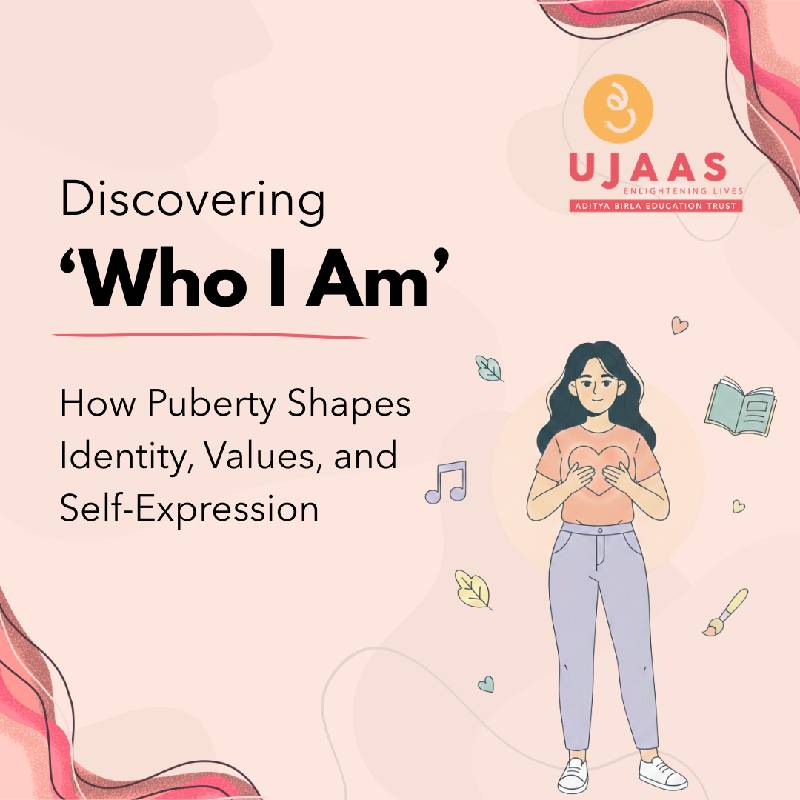
Discovering ‘Who I Am’: How Puberty Shapes Identity, Values, and Self-Expression
"Who am I?"
It is arguably the greatest question that a human being can pose, and in most cases, it is in the teenage years that the search really starts. We tend to think of puberty as a series of biological checklists like growth charts, voice changes, and acne. But the transformation behind these physical changes is much deeper. It’s when the child redefines their psyche to construct their own identity. This change may be abrupt to parents and teachers. An obedient child may at one point start being opinionated, rebellious, or withdrawn. It is not only patience that will help in this tricky path, but also a supportive infrastructure. Here is where the necessity of a menstrual health and menstrual hygiene initiative unexpectedly comes into play.
Hence, by supporting a menstrual health and menstrual hygiene initiative, we ensure that young people, and especially menstruators, feel safe and comfortable in their bodies. This physical safety foundation is the key to healthy identity formation.
How Does Identity Formation Take Place in Adolescents?
Puberty is like a biological clock which drives the search for self. It is not simply about the hormones altering the body, but it is also about the hormones altering the brain. The teenage brain starts seeking something new, social interaction, and freedom. This is the biological foundation of self-expression.
At this stage, teenagers begin to perceive themselves as not only the daughter of so-and-so or the student of so-and-so, but as separate personalities. They start evaluating their personal values of their family. While this process may be messy and confusing, it is still necessary.
When Does Identity Formation Start?
The identity-seeking process can follow concurrently with the physical development timeline. Understanding the typical puberty age helps parents to anticipate such behavioural changes. The age of female puberty typically begins between the ages of 8 and 13, whereas the age of male puberty generally starts between the ages of 9 and 14.
A child may appear to look like a teenager because of the early age of female puberty, but the emotional maturity may not have developed yet. On the other hand, a boy who reaches the age of male puberty later than his friends may have a problem with his identity, as he may feel he has been left out.
The awareness of such timelines helps adults in giving the right level of support. It reminds them that sudden shifts in mood or the way of dressing up are not accidental but a step towards growing up.
What Is The Role of Menstrual Health in Shaping Self-Worth?
Menstruation is a defining moment in the identity formation for many girls. It is a rite of passage that marks the entry to womanhood. But if everyone is silent or is embarrassed about this transition, it can break their self-esteem. That is why a strong menstrual health and menstrual hygiene initiative is so essential to the overall upbringing of a child.
Girls who are taught good menstrual health and hygiene feel in control of their bodies. Providing them access to clean and safe products serves to strengthen the message that they matter and are valued. Having the awareness that menstruation is a normal human experience will make them feel related to a broader community of women.
A menstrual health and menstrual hygiene initiative is not just about learning the biological process; it is about safeguarding the delicate identity of a young girl. It enables her to incorporate this transformation into her identity with pride and not shame.
The Need for Self-Expression
The desire for self-expression becomes hard to ignore as the brain starts developing. In this stage, you can find adolescents trying drastic clothing styles and haircuts or experimenting with makeup. They might suddenly abandon their favourite childhood sport for a new hobby like playing the guitar or coding. They may also start developing social, ethical, or political opinions that are radical.
This may be shocking to parents. They can easily consider these changes to be some sort of phase or rebellion. However, this is simply them hitting puberty. They are testing out various personas to determine which one suits them.
Promoting healthy self-expression is extremely important. A child gains confidence when he or she feels safe to express himself or herself, be it through art, debate, or fashion. On the other hand, suppressing their self-expression may bring resentment and misunderstanding in them.
Navigating Values and Peer Pressure
One of the ways of constructing an identity is to look out. The peer group usually takes precedence over the family during puberty. This is biologically programmed; human beings are social animals that are meant to locate their tribe.
This, however, comes with the issue of peer pressure. A teenager is frequently torn between the values that he or she has been brought up with and the values of his or her friends. With time, they have to be able to recognise these into their own belief system.
In this case, menstrual health and hygiene education can become very important. Teaching youths to take care of their bodies is, in fact, teaching them to take care of themselves. When a girl assumes that her own menstrual health and hygiene matter, she will thus be more resistant to negative peer influence as she begins to focus on the independence of her body in other aspects.
How Adults Can Support the Journey
As an adult, you should first ensure that when your child thinks of home or school, they feel like they are in a safe space. Providing them with this stability will allow them to take risks in expressing themselves openly.
Secondly, you should remind them that not everybody reaches their puberty age at the same time or speed. Talk over difficult issues openly. When you talk about topics like menstrual health and hygiene without flinching, you show them that it is safe to have these conversations and there is no need to feel awkward or embarrassed about these natural processes. This might even lead them to talk about other stuff that they might find sensitive, like their dating life, friendship drama, anxiety, and future dreams.
Lastly, learn to value their privacy. Respecting a closed door within reason is a way of showing that you acknowledge their growing independence.
Final Thoughts
The process of puberty is not only about making it through the teenage years; it is essentially about the adult self being born. It involves coming up with a new identity that is a mixture of one’s childhood, nature, and fresh experiences. By learning about the general timelines of puberty, such as the age of female puberty and the age of male puberty, along with providing means for self-expression, we can ease this chaotic period a bit. More than anything, by keeping menstrual health and hygiene as a priority, Ujaas is paving the way for young people's identities to be based on dignity and health.